Can Wisdom Teeth Affect the Health of Your Other Teeth?
Short answer: Yes — wisdom teeth can contribute to gum inflammation and periodontal changes around nearby teeth, and removal is often associated with improved gum health measurements in appropriate cases.
Wisdom teeth are located at the very back of the mouth, where they are difficult to clean even with good brushing and flossing. Because of their position, they are more prone to bacterial buildup and gum inflammation — especially when partially erupted or impacted.
Over time, this can affect not only the wisdom teeth themselves, but also the health of the second molars directly in front of them.
Wisdom Teeth and Gum Health
Wisdom teeth that are partially erupted, crowded, or difficult to clean can create an environment where bacteria and inflammation persist.
Multiple studies published in the Journal of Oral and Maxillofacial Surgery have found that patients with inflamed or problematic wisdom teeth often show deeper gum measurements (periodontal pockets) around adjacent teeth — particularly the second molars.
In many cases, these measurements improve after removal when extraction is clinically indicated.
What the Research Shows
One frequently cited study followed 69 young adults with mild pericoronitis (inflammation around partially erupted wisdom teeth). Researchers measured periodontal pocket depths before and after removal.
Key findings included:
Deep gum pockets (≥4mm) behind the second molar decreased from 88% before surgery to 46% after extraction.
In other areas of the mouth, patients with deep pockets decreased from 61% to 29% after extraction.
These findings suggest that removing inflamed wisdom teeth may be associated with measurable improvements in gum health indicators in multiple areas of the mouth.
Why This Matters
Even mild or recurring inflammation around wisdom teeth can be a sign of ongoing periodontal irritation.
If left untreated, this can contribute to worsening gum health around the back molars — an area that is already difficult to keep clean and maintain long-term.
For this reason, wisdom teeth that show repeated inflammation, food trapping, or deep gum pockets are often evaluated for removal earlier rather than later.
When to Get Checked
You should consider an evaluation if you notice:
Recurring swelling or tenderness behind your back molars.
Food consistently trapping around wisdom teeth.
Bleeding or inflammation in that area.
Your dentist mentioning deep gum pockets or "impaction."
Imaging or exam suggests there may not be enough space for the wisdom teeth to fully erupt and be cleaned properly — in these cases, earlier removal is often easier and associated with better healing.
A clinical exam and X-rays allow us to evaluate the position of the wisdom teeth and the health of the surrounding bone and gum tissue.
From there, we can determine whether monitoring or removal is the most appropriate option.
The Bottom Line
Wisdom teeth don't always need to be removed — but when they are difficult to clean or showing signs of inflammation, they may contribute to gum changes in nearby teeth.
An early evaluation helps identify potential problems before they become more complex and ensures you understand all treatment options clearly.
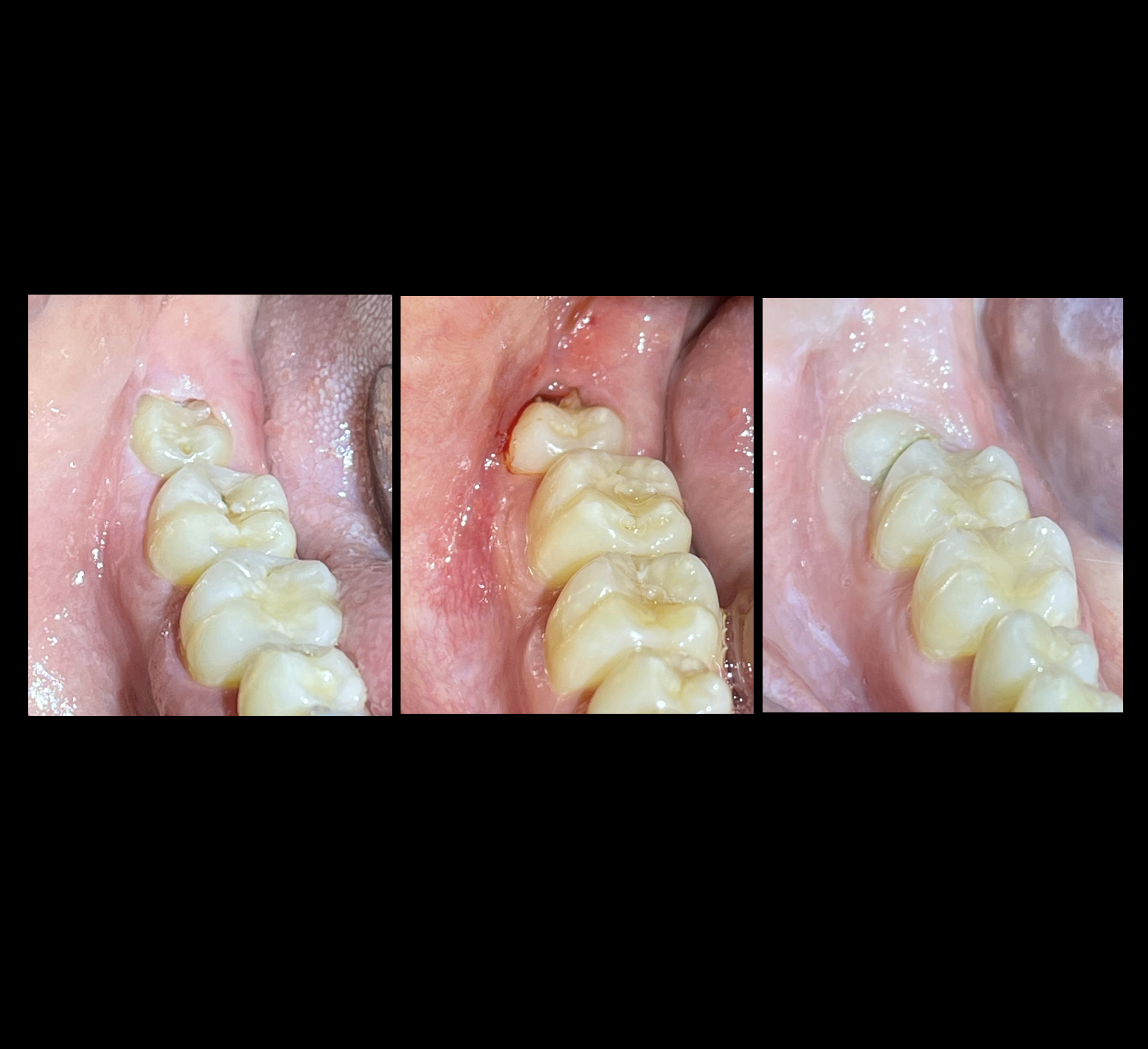
Three examples of wisdom teeth that are difficult to keep clean. All of these required removal. Many studies like the one above show removal of wisdom teeth can improve periodontal status of the remaining teeth.