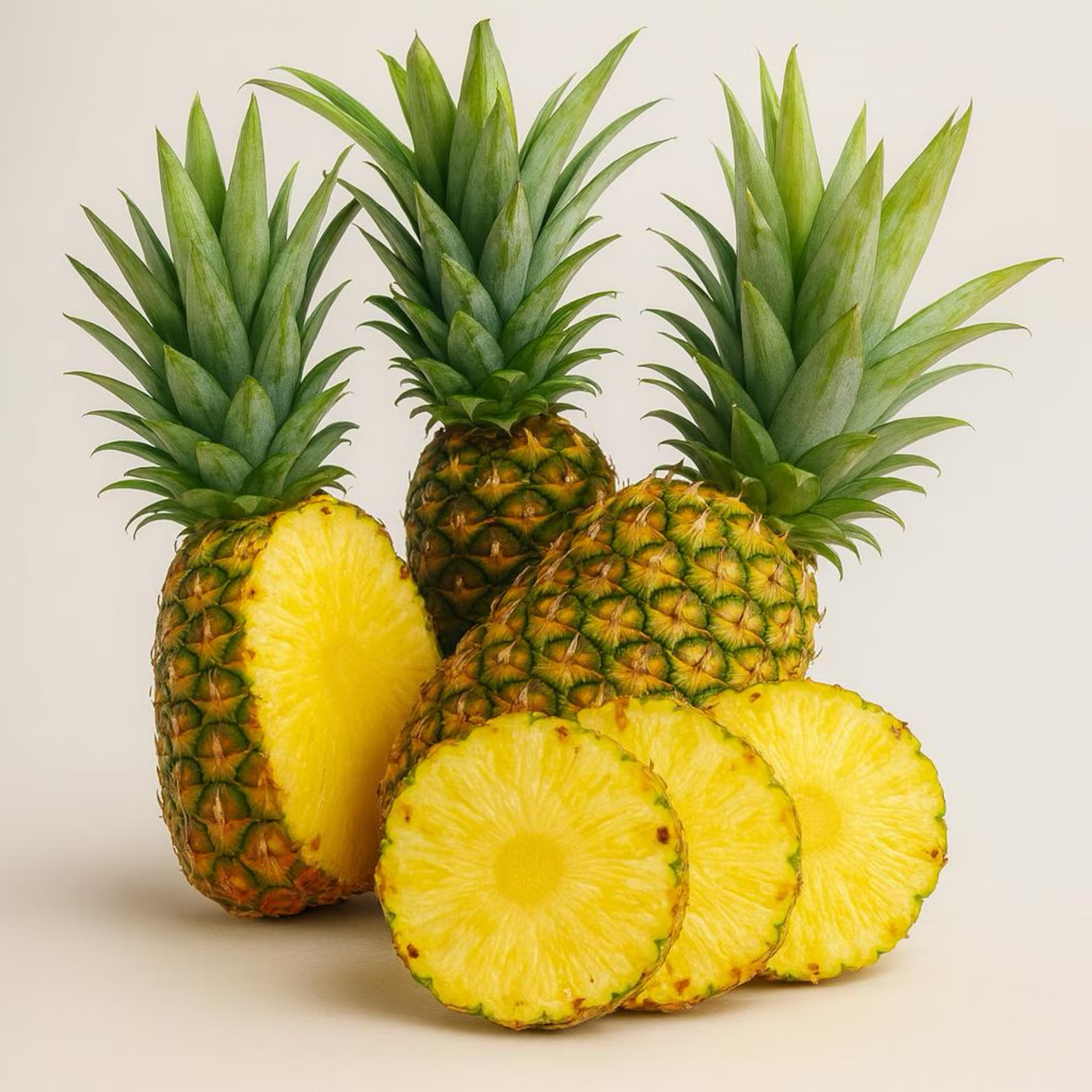
Can Pineapple Help After Wisdom Teeth Removal? What Bromelain Research Shows
Wisdom tooth recovery has gotten a lot easier than it used to be. Most patients now manage just fine with ice, soft foods, and a steady rotation of ibuprofen and Tylenol — fewer opioids required. What many people don’t know is that there's a natural compound, sitting in the produce aisle, with a real body of clinical research behind it for easing recovery even further.
That compound is bromelain, a group of anti-inflammatory enzymes naturally present in pineapple. Over the past several decades, researchers have studied bromelain's ability to reduce pain, swelling, and bruising after surgical procedures, including wisdom tooth extraction. The findings are interesting enough that it's worth a closer look.
Can Pineapple Help After Wisdom Teeth Removal?
Research suggests bromelain may help reduce pain, bruising, and postoperative swelling after oral surgery. Several clinical studies have found improved recovery comfort and a reduced need for pain medication in patients taking bromelain before and after wisdom tooth extraction. Results vary between studies, and patients should always consult their oral surgeon before starting any supplement prior to surgery.
What Is Bromelain?
Bromelain is a complex of protein-digesting enzymes (along with several other supportive compounds) extracted from the pineapple plant, Ananas comosus. While it's found throughout the plant, the highest concentrations sit in the stem — which is where most commercial bromelain supplements are sourced. The fruit itself, including the core, contains smaller but still meaningful amounts, which is why fresh pineapple juice can deliver some of the same benefits.
Researchers believe bromelain works through several overlapping pathways:
It reduces bradykinin activity, a peptide that signals pain and triggers inflammation
It dampens prostaglandins — the same inflammatory chemicals that NSAIDs like ibuprofen and diclofenac target
It promotes fibrinolysis, which helps break down the proteins involved in swelling and bruising and supports drainage of fluid out of inflamed tissues
It calms the release of pro-inflammatory cytokines and chemokines
In other words, bromelain doesn't just hit one part of the inflammatory response — it works on several at once, which may explain why patients often report broad improvements in recovery rather than just isolated pain relief.
Does Bromelain Help After Wisdom Teeth Removal?
One of the most rigorous studies on bromelain and oral surgery recovery was a 2014 randomized, double-blind, placebo-controlled trial published in the Journal of Oral and Maxillofacial Surgery.
The researchers compared bromelain head-to-head with diclofenac — a commonly prescribed NSAID — after lower wisdom tooth surgery. Patients received one of three regimens:
Bromelain 250 mg, four times daily
Diclofenac 25 mg, four times daily
Or placebo
Treatment started one day before surgery and continued for four days afterward.
The findings were significant. Both bromelain and diclofenac significantly reduced postoperative pain compared with placebo at every measurement point — days 1, 3, and 7 after surgery. Just as importantly, bromelain delivered meaningful improvements in patients' overall quality of life: better sleep, less disruption to daily activities, and significantly better self-rated appearance compared with placebo. Many of these benefits were comparable to those of the NSAID.
Swelling improvements with bromelain trended positive but did not quite reach statistical significance, and neither treatment did much for trismus (the temporary jaw stiffness that follows extraction).
What a 2019 Meta-Analysis Adds to the Picture
A 2019 systematic review and meta-analysis published in the Journal of Oral and Maxillofacial Surgery pulled together six randomized controlled trials covering 352 patients to give a clearer picture of how bromelain actually performs after wisdom tooth surgery. By pooling data across studies, this kind of analysis carries more statistical weight than any single trial.
The pooled findings reinforced — and in some places sharpened — what the earlier individual studies had suggested:
Facial swelling improved significantly at both timepoints measured. Patients taking bromelain had less swelling 2 to 3 days after surgery (the peak swelling window) and continued to show meaningful improvement at the 7-day mark, where the effect was actually stronger.
Pain relief showed up later rather than sooner. In the first few days after surgery, the meta-analysis did not find a statistically significant difference between bromelain and placebo for pain. By day 7, however, bromelain users were clearly reporting less pain than those on placebo.
Rescue medication use trended lower in the bromelain groups over the first week, supporting the broader pattern that bromelain may reduce reliance on additional painkillers.
Trismus did not improve. Consistent with other research, bromelain showed no meaningful effect on how wide patients could open their mouths after surgery — an important reminder that jaw stiffness has more to do with muscle trauma than with inflammation.
No serious side effects were reported in any of the trials.
The authors concluded that bromelain offers "moderate" relief of post-surgical discomfort — a measured but genuinely positive finding given the strict criteria of a meta-analysis. They also noted that in head-to-head comparisons cited within the review, bromelain performed comparably to NSAIDs and to dexamethasone (a corticosteroid commonly used after oral surgery), but without the gastrointestinal, bleeding, or blood-sugar concerns those drug classes can introduce.
Their main caveat was the same one that comes up repeatedly in this field: dosing varies considerably between studies, and larger trials with standardized protocols would help confirm exactly how much bromelain, taken how often and for how long, delivers the best results.
What Do Larger Reviews of the Evidence Show?
A 2023 umbrella review — essentially a review of multiple systematic reviews — evaluated the broader body of evidence on bromelain after third molar (wisdom tooth) surgery.
Across the available studies, bromelain consistently showed benefits for:
Reducing postoperative pain
Decreasing the need for rescue pain medication
Improving overall patient recovery experience and quality of life
The evidence on swelling was more mixed but generally leaned positive. Most studies did not find meaningful improvement in jaw stiffness, likely because trismus is driven more by muscle trauma than by inflammation alone — and bromelain's mechanism doesn't really address muscle injury.
Can Pineapple Juice Reduce Swelling After Oral Surgery?
Some patients prefer a food-based approach over capsules, which raises a natural question: does fresh pineapple juice actually work?
A 2021 clinical study published in the Journal of Craniomaxillofacial Research set out to answer exactly that. The study included 100 patients undergoing facial surgical procedures such as facelifts, brow lifts, and blepharoplasty (eyelid surgery). Half drank 350 mL of fresh pineapple juice twice daily — beginning one week before surgery and continuing for one week afterward. The other half received no juice.
The results were notable:
62% of patients drinking pineapple juice reported no postoperative pain, versus only 22% of the control group
54% had no swelling at all, compared with just 6% of controls
46% showed no bruising, while 30% of the control group experienced strong bruising
All differences were statistically significant, and no adverse reactions to the juice regimen were reported.
This study had limitations worth acknowledging. It evaluated facial cosmetic surgery rather than wisdom tooth extraction specifically, participants knew which group they were in (which can influence self-reported outcomes), and it was conducted at a single center. Even so, the findings line up well with the broader bromelain research and suggest fresh pineapple juice may offer a viable food-based path to similar benefits.
Safety Considerations
Although bromelain is generally well tolerated, it isn't completely risk-free. The most important consideration before any surgery is that bromelain may increase bleeding tendency — which is exactly the kind of effect surgeons want to know about ahead of time.
Bromelain can also interact with:
Blood thinners and antiplatelet medications
Certain antibiotics (including amoxicillin and tetracycline)
Sedatives and some opioids
Blood pressure medications such as ACE inhibitors
Patients with bleeding disorders, pineapple allergies, liver or kidney disease, or those who are pregnant or breastfeeding should avoid bromelain unless specifically cleared by their physician.
Because every patient's medical history is different, your oral surgeon may recommend stopping bromelain a few days before surgery — or skipping it entirely — depending on your medications and overall health.
Practical Takeaways
Bromelain can reduce pain, bruising, and postoperative discomfort after oral surgery
Most studies showing benefit involved taking bromelain before and after surgery
Taking bromelain 500 mg supplements is more standardized than drinking pineapple juice
Bromelain can interact with medications and may increase bleeding risk
The Bottom Line
Bromelain may meaningfully improve recovery after oral and facial surgery by reducing pain, bruising, and inflammation, while potentially lowering reliance on traditional pain medications. The strongest, most consistent evidence supports its use for reducing facial swelling and easing pain in the days following wisdom tooth surgery — though it's unlikely to do much for jaw stiffness.
Will pineapple eliminate wisdom tooth recovery discomfort entirely? Probably not. But the available evidence suggests it may help many patients recover more comfortably — and for a remedy you can pick up at the grocery store, that's worth considering.
If you are preparing for wisdom teeth removal and have questions about recovery, swelling, or postoperative care, our oral surgery team is happy to guide you through the process.
This article is for educational purposes only and should not replace medical advice from your surgeon or physician.
Sources
Liu, S., Zhao, H., Wang, Y., Zhao, H., & Ma, C. (2019). Oral bromelain for the control of facial swelling, trismus, and pain after mandibular third molar surgery: A systematic review and meta-analysis. Journal of Oral and Maxillofacial Surgery, 77(8), 1566–1574.
Majid, O. W., & Al-Mashhadani, B. A. (2014). Perioperative bromelain reduces pain and swelling and improves quality of life measures after mandibular third molar surgery. Journal of Oral and Maxillofacial Surgery, 72(6), 1043–1048.
AlMofreh AlQahtani, F., et al. (2023). Effectiveness of oral bromelain on third molar surgery patients: A systematic review of systematic reviews. Advances in Oral and Maxillofacial Surgery, 12, 100449.
Mahmood, B. J. (2021). The effect of using pineapple fresh juice to improve post-surgical pain, ecchymosis and swelling in maxillofacial region. Journal of Craniomaxillofacial Research, 8(2), 67–75.