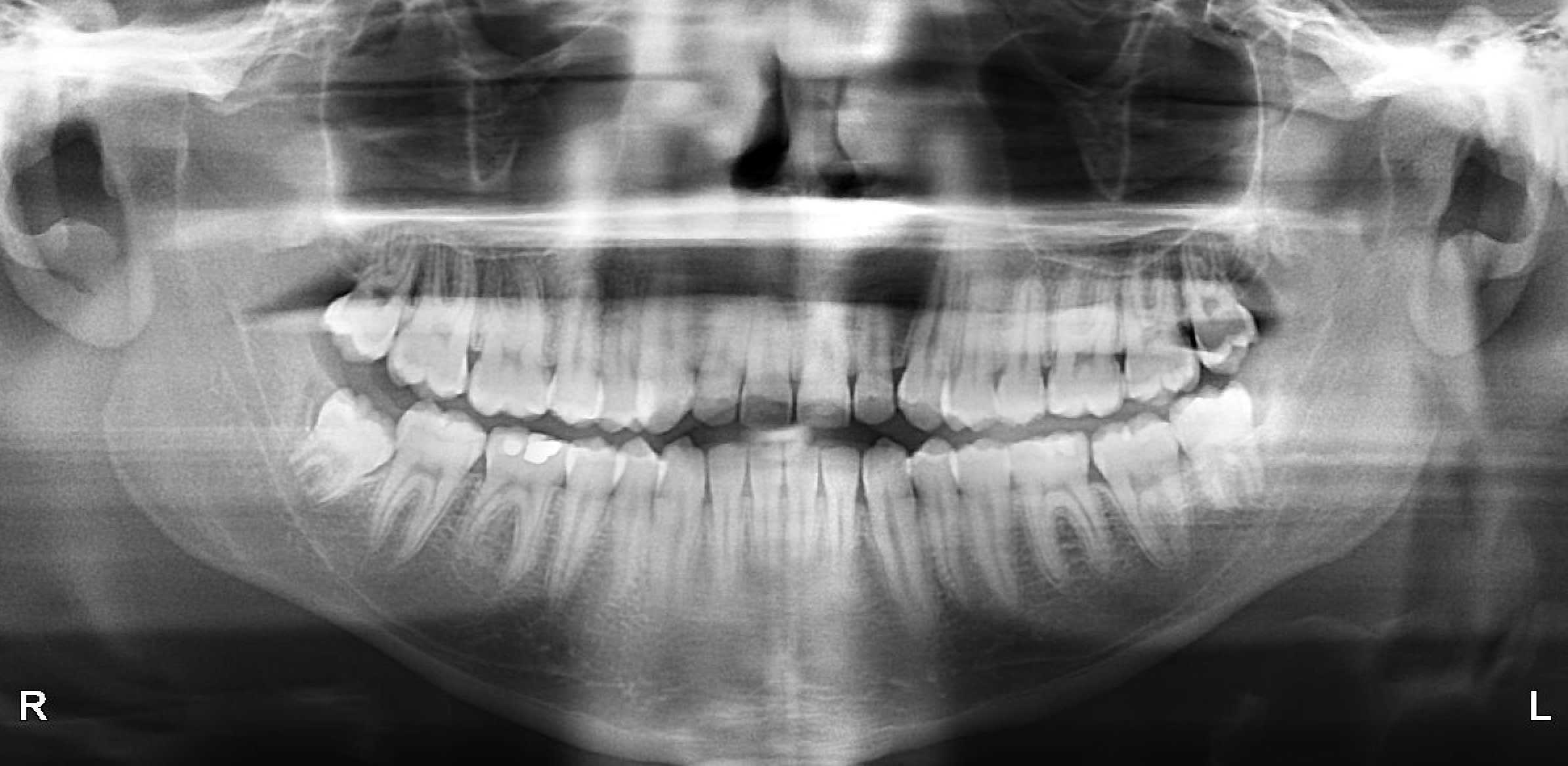
Wisdom Teeth
Wisdom teeth are the third and final set of molars, sitting at the very back of the mouth. For most people they erupt in the late teens or early twenties — and for most people, the jaw simply isn't large enough to accommodate them in a healthy, functional position.
When that happens, wisdom teeth become impacted — trapped under the gum or angled against the neighboring tooth. Even when they aren't causing obvious pain, impacted wisdom teeth are difficult or impossible to keep clean, and over time that can lead to:
Gum disease around the wisdom tooth and the neighboring second molar
Decay of the second molar (often in a spot that can't be restored)
Cysts or, rarely, tumors that develop in the jaw around an impacted tooth
Crowding or disruption of orthodontic results
Increased risk of jaw fracture at the site of impaction
Unexplained pain, swelling, or recurring headaches
The key point: "no pain" doesn't always mean "no problem." Many of the issues above develop quietly and only become symptomatic once damage is already done. Removal also tends to be more straightforward — with faster healing — when done earlier rather than later.
Evaluating wisdom teeth starts with an exam and a low-dose 3D scan (cone beam CT) when needed, which lets Dr. Stahr see the position of the tooth and its relationship to the nerve and sinus before recommending a plan.
Learn more:
Asymptomatic Wisdom Teeth — why a quiet tooth isn't always a healthy one
Wisdom Teeth Removal Get More Difficult With Age — timing matters
Periodontal Disease and Wisdom Teeth — the gum-health connection
PRF and Wisdom Teeth — using your own platelets to support healing
To schedule an evaluation, please contact us here.