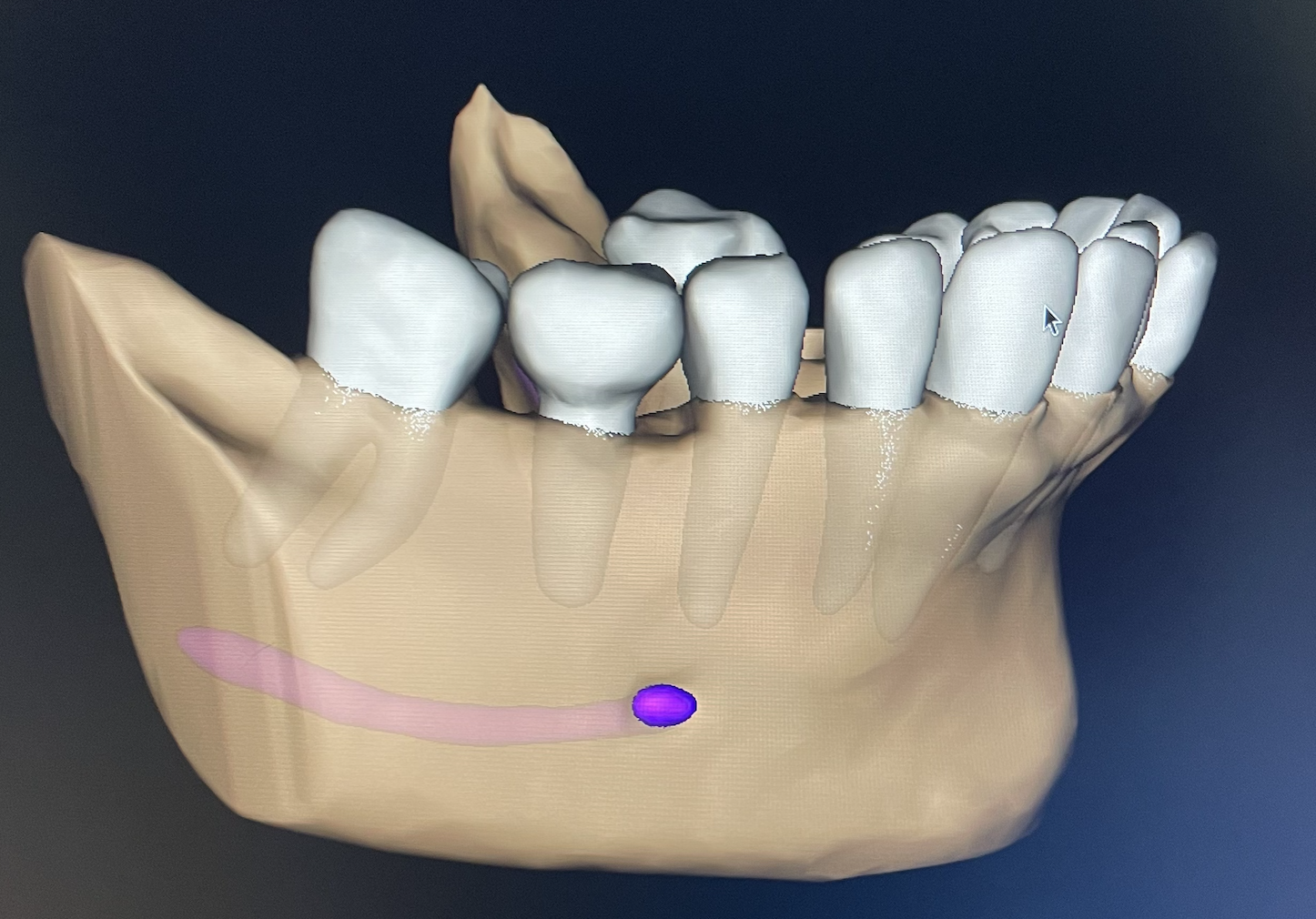
Where an implant sits matters for decades 🦷
At the 2025 AAOMS Dental Implant Conference in Chicago, one of the speakers summed it up simply: ideal implant placement is the best treatment to prevent peri-implantitis.
What is peri-implantitis?
Peri-implantitis is inflammation around a dental implant that leads to progressive loss of the bone holding it in place. Early signs can include bleeding or swelling of the gums around the implant, pus, or a deepening pocket. Left untreated, it can lead to losing the implant.
Why position matters so much
Smoking, a history of gum disease, and poor home care all raise the risk of peri-implantitis. But one study found that implant malposition carried an odds ratio of 48.2, by far the strongest risk factor identified. An implant placed too far forward, backward, or too close to a neighboring tooth can leave thin bone and gum tissue around it. It can also lead to a crown that traps plaque and is hard to clean.
Once an implant is in the wrong spot, no amount of brushing or follow-up care fully fixes it. The best treatment is prevention, and prevention starts with precise planning and proper placement.
How we plan for the long term
That's why we use computer-guided implant surgery. With 3D imaging, we plan each implant around your bone, nerves, and neighboring teeth, with the final restoration in mind. During surgery, real-time dynamic navigation guides placement according to that plan.
Considering a dental implant? Choose a specialist who plans far beyond the day of surgery: Dr. David Stahr, Board-Certified Oral and Maxillofacial Surgeon with a focus on computer-guided implant surgery.
Serving patients from Fairmont, Morgantown, Cheat Lake, Bridgeport, and Clarksburg.